John Schollick’s Story — Part 1
Rear Vision
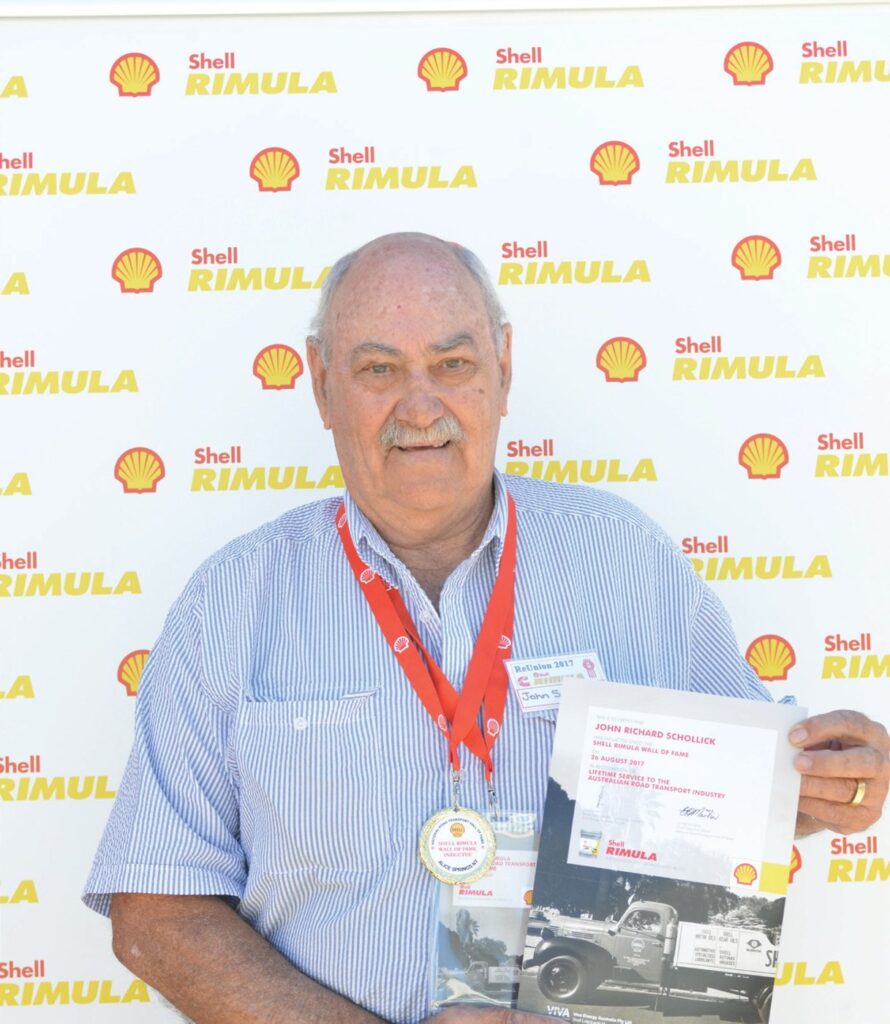
John Schollick recalls the early years of a lifetime in the transport industry.
Words by Chris Smith. Images from the ACT archive; no individual photographer is identified in the retained feature.
This is the first of a series about people I believe are the backbone of the modern transport industry.
It’s interesting to note how even their attitudes towards things like safety, compliance and following the law evolved as they became serious players in the industry.
My first story is about John Schollick, now based in the Lockyer Valley in Queensland.
John, at 73, is part of many local groups, clubs and societies.
He has had many ventures including restaurants, farms and transport companies and he is both persuasive and charming and an excellent networker. He was a founding member of organisations like NatRoad as well as part of the group that started the Truck Drivers Memorial in Tarcutta.
His story is a good yarn we’ll explore over the next few issues. We’ll look at his early life in transport as a driver in this issue before he built up his business working with the likes of Lindsay Fox and eventually selling his company Road City Transport to New Zealand juggernaut Mainfreight.
John grew up on a farm and farming has always been a part of his life and it is to this day. Growing up on a farm, trucks were always around.
“I had a fascination with trucks when I was young because I was a farm boy, we had trucks and trailers there, I just loved trucks because they were a big monster and I thought I just have to drive one of those,” he remembers fondly.
He says times were much different than they are today when licensing was concerned for both cars and trucks. He vividly recalls how he got his car licence in 1964 in Wallan in Victoria at the local police station in the morning and by the afternoon he also had his semi-truck licence.
With the local officer in the passenger seat he says, “We went up and got the local paper and he said you are alright, you can drive and I got my licence,” he tells ACT of the ease in which it was all done.
“That afternoon we had a load of wool, we had a J6 Bedford with a 30-foot strap trailer and we went into the TRB, the Transport Regulation Board is what they were called in those days, in Carlton and fronted the counter there.
“The older gentleman there said you are here for your truck licence and I said yeah, we had a few bales of wool on the trailer and he saw the truck and he said righto can you back it, and I said yes and we went to the side street and he said I want you to back up, up this street and I backed up dead straight and he said you can do that alright, I want you to drive around the block, I drove around the block and he said right, let’s go into the office, you’ve got your licence.”
With his semi-truck licence John decided to get a job as a driver, his first driving job was for a company called TradeX Transport which was owned by a stevedoring company FG Strang.
“I worked there carting stuff off the wharf, in those days there were no containers, it was all wooden hand trollies with steel wheels and we used to pick up bales of material to and from little workshops all around Melbourne, and that is what I used to do carting to and from the wharf in a Thames Trader.”
Back then it was all break bulk and it used to come off the ships in slings and worked by a contingent of wharfies, which he reckons were a different breed altogether back then.
“I did that for a while based out of Coode Island, out of a big hangar from the war. We had a manager back then by the name Bob Story, he would come to work in the morning with a longneck in his hand and every time you saw him he had a longneck VB in his hand, and that’s how he ran the business,” he vividly recalls.
It was Mr Story that started John’s life as an interstate driver.
“He said to me one day, boy you are going to Sydney and I said, Sydney holy dooley, where is that?”
John tells ACT he was given the job of driving from Melbourne to Sydney driving a Thames Trader Sputnik single axle with a bogie drive 36 foot single trailer.
“I had to go to Dulux Pants in Clayton so I put on these pallets and I went on my way to Sydney,” he says.
“It took me two and a half days to go to Sydney because I wasn’t too sure on the corners on the road and the angles on the road, and I got up towards Sydney, what they call the “Hole in the Wall”, and I actually had to stop and check things out, you probably could have got two trucks high in there but I was a bit scared,” he admits.
The “Hole in the Wall” was an old bridge that was half an oval shape and that was a stone and brick bridge, and it had a railway line that ran over the top of it.
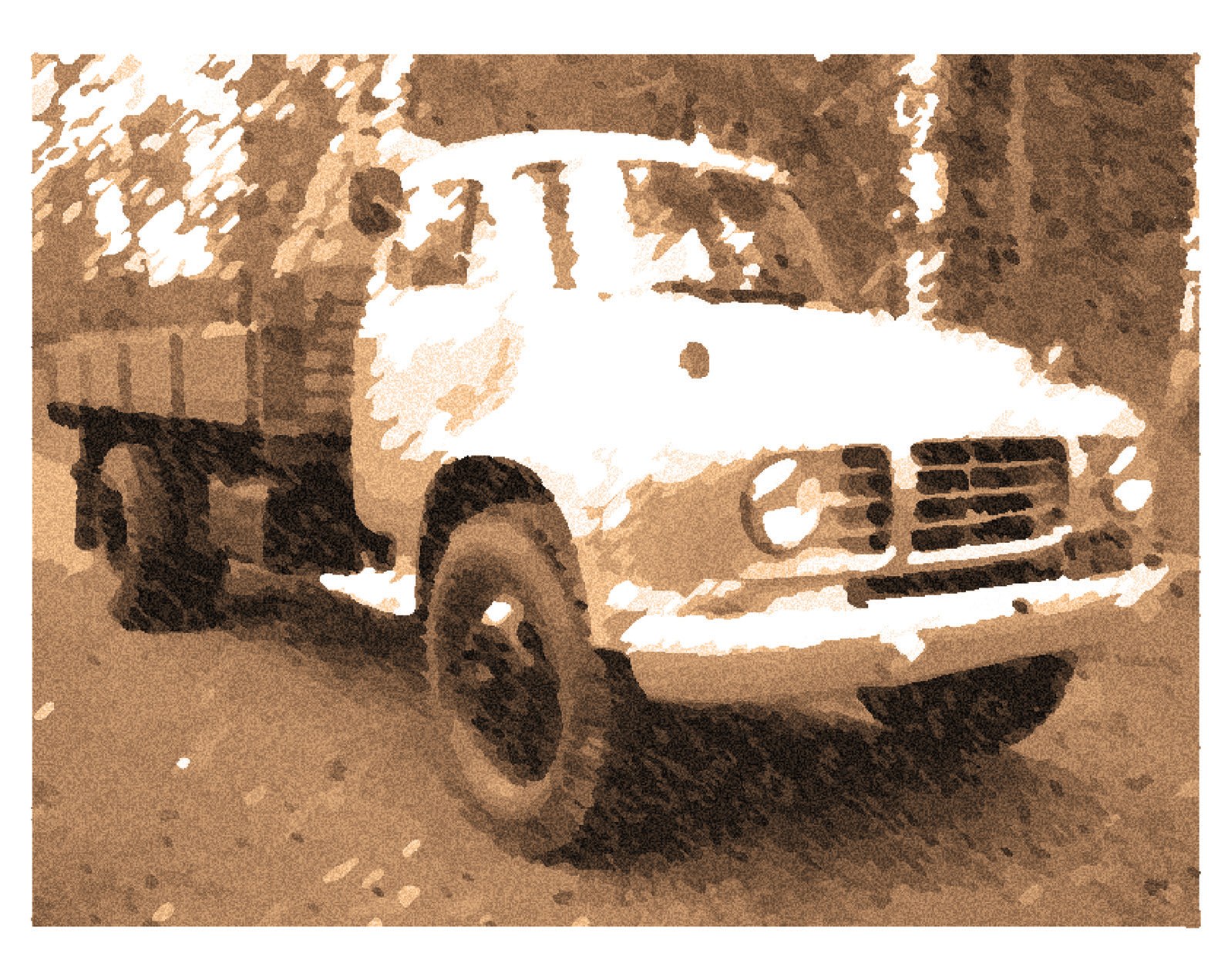
“I was actually horrified and didn’t think I was going to get under it, even though there were trucks coming back the other way straight under it, I was just 18 and a half at the time.”
After much trepidation he made it through the “Hole in the Wall” and unloaded his paint. For his return trip he was sent to Kellogg’s Corn Flakes.
Once again young John was in for a unique and exciting experience.
“I go around there and they hand stacked these boxes of breakfast cereal and it seemed to me that they were just never going to stop, they just went up higher and higher and higher and it was just a great big high load, I had done loads of hay over the years but this was a lot higher,” he exclaims.
“They tarped it up, but as safety goes that wasn’t even mentioned, I climbed my extension ladder and rolled my tarps out, it took hours to do that job. It took me a day and a half to come home.”
He says his first interstate trip took him four days, but he was hooked. “I thought, this is pretty good stuff, I like doing this, so I ended up doing a few more loads and built up my experience.
He left FG Strang to pursue other ventures in transport. His next job was with Woodruff Dairies.
“I drove a Foden, a Leyland and an Atkinson. The Atkinson had a six-cylinder Rolls Royce engine in it, I use to go down to Trafalgar, Tooradin and Warragul and pick up bulk milk out of the factories and bring it back.”
It was two and a half years and John got itchy feet.
He was up for another trucking adventure.
“I started work at a company JH Ralph and Sons that were abattoirs in Brooklyn, I drove a stock crate that was 2.5 decks high, that’s what you had back in those days 2.5 decks of sheep or a deck and a half of cattle, I drove an old Dodge with a 760 petrol motor that had a pusher axle underneath it. They gave you a spanner, so you could adjust the coil because if it didn’t have a flame coming out a foot long, it wasn’t tuned properly, so you needed to get that flame coming out the side,” he recalls.
“I used to cart a lot of pigs, used to go to the pig and calf sales at Forbes, Trundle and Trangie and bring pigs back.”
It was this period he got introduced to the darker side of the industry and to a little pill that he calls a “briquette”.
“I got introduced to the old headache tablet called the briquette,” he says.
“We used to get that supplied at the old Shell in West Wyalong, up the hill there, you used to go in there and tell the old mate there that you used to have a bit of a headache, he’d say I have the medicinal things for you and of course, you’d buy your briquette off him, it was a funny time back then back in the 60s and in the early 70s.”
In those days he says he moved around a bit working for different people until he settled 1972 for a couple of years working for Kwikasair.
“I got put into this thing called a Kenworth, which was called the “Grey Ghost” by nickname these were the K100s. That was probably the most enjoyable time I had for a long, long time driving in these things, they used to fly. The 8V92 GMs in them, screaming their little heads off, torsion bar suspension, hardly any room to move in the cab and away you went, half a dozen, up to a dozen of us used to travel together 90 mile an hour plus, being a young bloke in my 20s I thought this was grouse having a full on truck that could really fly,” he says.
He reckons it was very obvious that the company owners, the Thomas family, paid the authorities large money to keep the trucks moving.
“They never ever stopped us, they just used to flash their lights at us in their Mini Coopers and their Studebaker Hawks,” he says with such exuberance that you feel like you are right there with him all those years ago.
John says back then the corruption was unbelievable in the industry.
The next move for John was to buy his own truck and work for himself. To be continued….
Rear Vision: where are they now?
Do you know where this truck is today, or have an update on its story? Tell ACT what happened next. We will verify current updates before adding them to the archive.