John Schollick’s Story — Part 2
Rear Vision
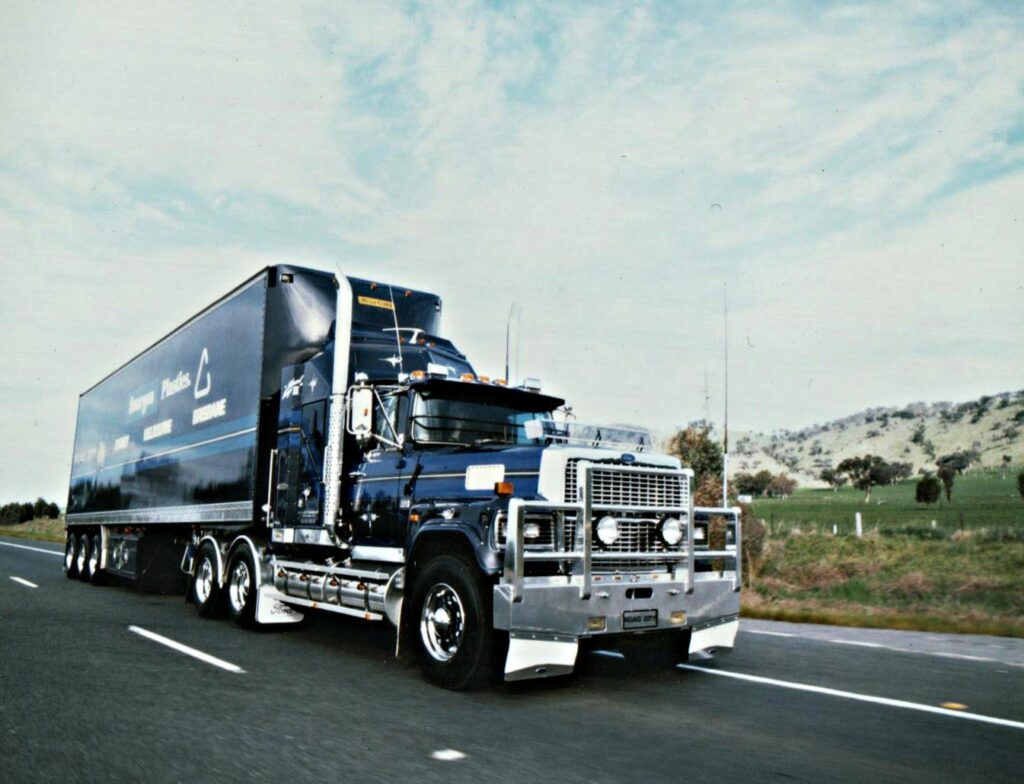
The next chapter of John Schollick’s career follows his move into running his own transport business.
Words by Chris Smith. Images from the ACT archive; no individual photographer is identified in the retained feature.
Taking up from Part 1 of where John’s story left off…After life at Kwikasair John decided to buy a run with Ansett doing local work around Melbourne in 1975.
The conditions weren’t ideal, he and the union boss didn’t see eye to eye on idealistic principles.
“The man there running the union shop, Max Harris, he is probably long gone by now, I didn’t believe in his beliefs, he and I locked horns, with me being a country boy, he suggested that I sell my business and get out,” he says.
Whether it was a threat or merely coercion, John didn’t want to find out and took the warning seriously.
“I took heed of that warning and figured I could get into a lot of trouble if I stayed,” he recollects.
Finding another job wasn’t hard and he quickly started work with Taylor Dalton doing rocket freight in a SAR, the work was similar to that of Kwikasair.
“I decided then, if I could make money for someone else, I could make money for myself, so I went and bought an old LPS 1418 off Taylor Dalton,” he says.
He says the single drive Mercedes Benz wasn’t a bad truck and it allowed him to do work for Clyde Brothers in Croydon, VIC. The job was different to what he had been doing before, it was carting cattle.
The Mercedes Benz quickly became a liability rather than an asset pulling the stock carts.
“This truck was costing me a lot of money, I wasn’t making money, I was actually losing because I was breaking down all the time,” he says.
He says his first wife Katherine said she didn’t want to be married to a truckie so he ended up moving out of Melbourne following a job she had found for him as a salesman for Cyclone Rural Fencing in Bendigo.
“I took that job on and we lived in Bendigo for two years, which was enough, so I decided to buy a farm in Culcairn, NSW,” he tells ACT.
He says it was a large property with cattle, sheep and grain.
Always up for a side hustle John found his way back into trucking.
“In Culcairn I got into the quarrying business and bought a run with a company owned by K & H Aggregates, which was part of LJ Hooker,” he tells ACT.
He says when he was with Cyclone Fencing they were sold to Boral, and says they weren’t very nice people to work for.
“They were gung-ho, and I didn’t like their policies, and the way they treated people, it was really disgusting,” he tells ACT frankly.
“Blow me down, I was only at the quarry for 18-months and Boral bought the quarry too. So, I thought I am getting out of here. I was lucky enough to get out of the quarry and sell my quarry runs,” he says.
The next venture was carting grain and fertiliser.
“I had an old Louisville at the quarry, so I took the old Louisville and I started carting grain with the three-axle dog and truck,” he explains. He says the business picked up from that point.
“I was doing grain locally at home, going to the mills and all that sort of stuff and doing fertiliser. I bought a N10 Volvo and I carted with that. I then bought my first convertible trailer, a 38-foot Lusty, things started to pick up pretty well,” he says.
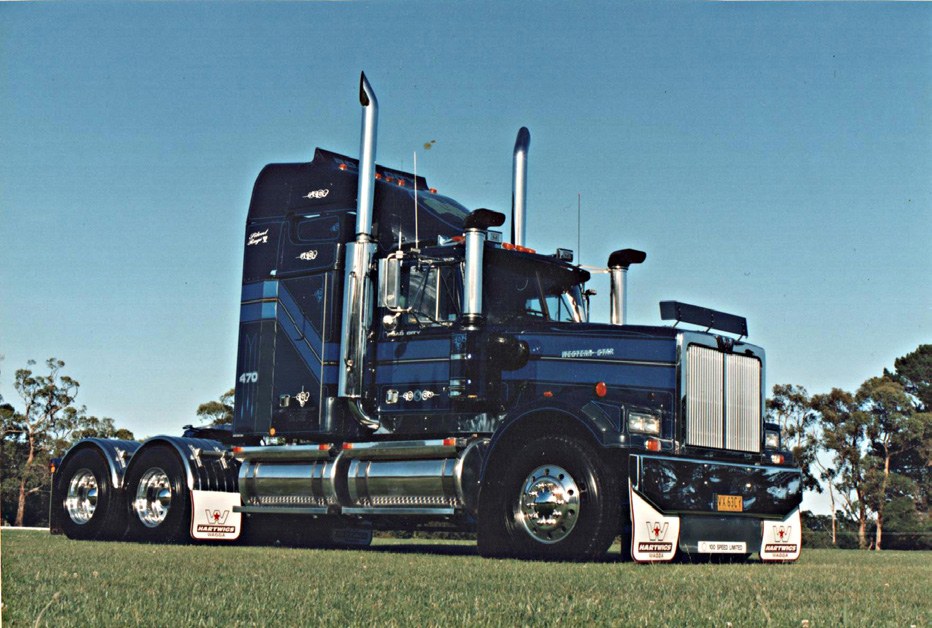
It was a boom time and he bought his first brand new truck, a Western Star that came out to Australia in 1984.
“I had the first one in the Riverina and North East Victoria and I just grew from strength to strength in that business,” he says proudly.
He had a couple of trucks and scored a contract with Yoplait running out of Echuca every Friday with one truck carting yogurt to Perth for a Monday morning delivery.
“That worked out to be extremely successful and I moved into the interstate transport business.”
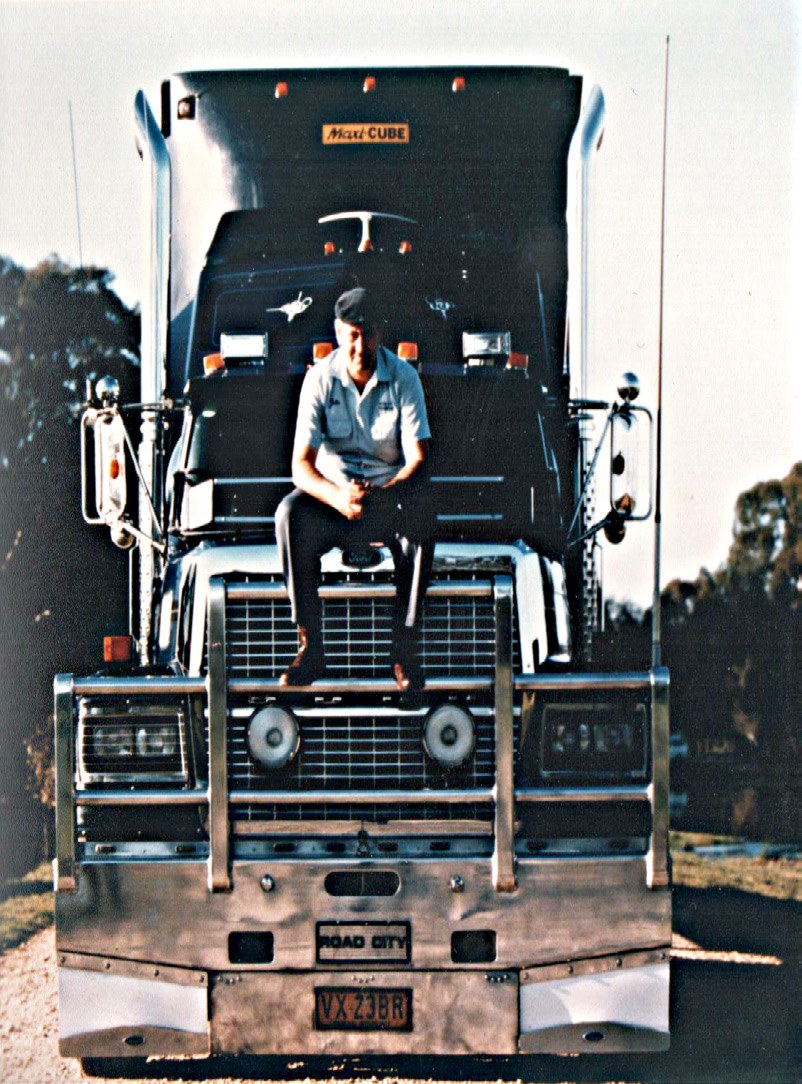
This was also the beginning of Road City Transport.
“I got into Road City Transport in 1988, the name came about through a good friend of mine his name was Roger Crosby and it was named Roger Crosby Transport. I rebranded it with Road City Transport,” he tells ACT.
He says Roger had a major contract with Smorgan Plastics in Melbourne and Sydney for years. The Smorgon family is one of the richest families in Australia and had interests in all sorts of manufacturing, steel and many other industries.
“I was lucky to take over the contract because Roger wanted to get back into astronomy, and he did in a big way,” he says.
He tells me the story of how his lucky acquisition from Roger paid extraordinary dividends.
“One day I went into Smorgans in Melbourne and Barry Smorgan came down to me, Barry was one of Victor’s sons, he said to me that I had to buy five more trucks and five more trailers because of the volume of work that was caused by Schweppes transition from glass to full plastic,” he recalls.
“So we did that for a while until I had another visit from him where he said I had to buy another five because he wanted me to takeover the Sydney to Brisbane run.
“I went and did the deal again, it was a pretty big deal. We got the trucks and trailers running. At that stage I had 12 trucks. I thought I’m not going to subbie to Toll or Linfox or anyone like that, I am going to take care of my own business.”
One of John’s skills is prolific networking and he says he went to see I lot of people and started depots in Melbourne, Sydney, Adelaide and Brisbane. The big names keep being dropped, Australia’s best known brands.
“I went out and I just went like mad, I have a lot of friends in business through different connections, I ended up having Tontine’s national account, with distribution and warehousing, they did pillows in from Adelaide,” he says.
RCT also made its mark on the container business because of its Mirabella contract.
The company got into Brooklyn and Brisbane working containers.
“I ended up getting Mirabella Lighting in Melbourne. We used to get their containers in Melbourne and we’d de-camp them and then we would pallet rack it and store it, as Mirabella wanted deliveries, we did that for them. We did logistics for them.
“I bought my first swing lifter in 1997 which was a Hammar. Only a handful of companies had swing lifters at that time and with this I was able to secure 99 percent of the market work, all the fresh produce in Brisbane,” he tells ACT.
“We had NatRad Radiators, we had Channel Nine’s account for Hey Hey it’s Saturday and their Midday Show and we used to do all the warehousing for that because Channel Nine in Richmond outgrew their site so all their storage rooms ended up being studios so we ended up having all their storage, carting it around Australia for all their various shows,” he explains.
John also managed a strategic marriage with one of the biggest names in transport, Linfox. He says because Linfox never had an interstate business in Queensland, a plan was hatched with Lindsay Fox and his directors that they use part of the RCT depot for Linfox’s Kmart contracts.
“All of Kmart came up with FCL Rail and it would be anything from 200 to 700 pallets a day and we stocked them and warehoused them, we’d act as Linfox agents,” John says.
“It was a wonderful relationship. We did a lot of work with them for many, many years. A lot of people said they will do you over, but that wasn’t so, they were wonderful people to work for, and the management team I worked with were great. We got paid fairly, a very good rate.”
The business was running hot, it seemed like everything John touched turned to gold. He was constantly looking for new opportunities. Even pulling the Channel Nine gear around inspired him to transport other entertainment.
“I started going out doing music shows and entertainment like the Highway Men and all that kind of thing, which grew to a sizable part of the business,” he explains.
The growth didn’t stop, and opportunities were seized upon.
Looking for niches was part of his strategy.
“I wasn’t really interested in doing general freight because I thought anyone can do general freight,” he explains.
“I always looked at doing things other people didn’t do and specialise in it.”
As the interstate business boomed, once again the Smorgan side of the business would lift them even further.
“Back in the 1990’s Barry had come to me and said we are going to have a massive growth because Coca Cola are going out of glass and going into plastic and they had the contract for making all the bottles,” he relays.
Smorgon were making Coke bottles for the whole of Australia and RCT’s job was to deliver them all.
He says Coke’s national logistics man would send a fax every Wednesday with what deliveries he would have out of Wetherill Park. John says it would be up to 60 loads on the weekend from Friday to Monday morning of bottles going out.
“A lot of my subbies were fridge vans that had been to the markets on Saturday night they would go straight around to Wetherill Park at Smorgans and they would load a load of plastic bottles on pallets which was around three or four tonne and they would go and be unloaded straight away,” he says.
“We had a very quick turn around and it was very profitable for RCT. It was all volume, cubic freight. We paid an extra $150 to $200 more than anyone else so we had good operators.
“Anybody that didn’t have the right equipment or didn’t do the job to the standard we wanted, we wouldn’t employ.”
He built up RCT from two to 82 trucks with a large contingent of subbies. As the business boomed, he would also face some of his darkest moments in his personal life as the company became the target for acquisition.
More in the next installment.
Rear Vision: where are they now?
Do you know where this truck is today, or have an update on its story? Tell ACT what happened next. We will verify current updates before adding them to the archive.