Pride & Place — B&K Express Freight’s Mack Trident
Rear Vision
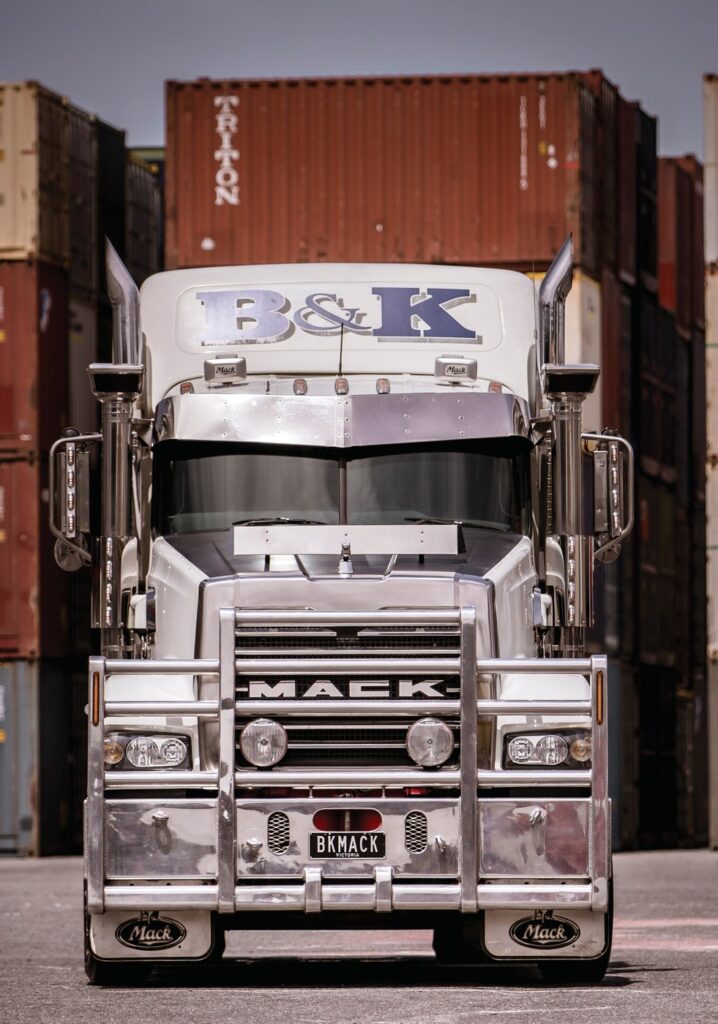
B&K Express Freight creates a flagship Mack Trident to lead its Scania fleet.
Words by Chris Smith. Photography by Greg Forster.
Brian and Karen Wilson are the names behind B&K Express Freight. Brian is now 56 and has spent his life in the transport industry with his father being a diesel mechanic he grew up around trucks.
In this issue we are featuring his 2011, 525 hp Mack Trident. The rest of his fleet are nothing like this one. They are high-productivity Scanias and with some Performance Based Standards (PBS) approved variants hauling Freighter A-doubles. Like I say, every fleet deserves a flagship and the Mack fits the part.
Brian has done the hard yards, which we’ll share in this story.
Today his kids run the business that he and Karen built up while they take a back step.
“My son, Brian Junior, runs the yard in Sunshine, Victoria, where we are based. One of my daughters, Kylie, works there as well. She does all the empty container side of the business.
We have three trucks that constantly shuttle empty containers back to the yard from our premises. My daughter Kayla works from Torquay doing all the time slots with my brother-in-law,” he says.
Brian started in transport working in the yard of Holyman Transport just helping out his dad when he was about 10 years old. By the time he was 15 it became his first paid job.
“I started off on the weekends washing trucks and driving trucks around the yard. I helped the old man strip things down and all that sort of stuff,” he recalls. “Eventually I got old enough to be able to move the vehicles around, within the premises of course, because I was under age and I used to wash the trucks and trailers on the weekends.”
He says at that point he really didn’t know what direction in life he was going to take. When he did leave school, it wasn’t for a job in transport.
“When I left school, I didn’t go to work in trucks, I actually went to work for Coles for eight years,” he tells ACT.
“I was working night shift there because that was where the money was. ” His first step back into transport was with his brother-in-law. He had started a little transport company based near Tullamarine airport.
Like many, there just wasn’t enough cash coming in to support his family with the one job and Brian needed a second job. In the early hours of the morning he would do a garbo run and in the day he would be driving the little Hi-Ace van delivering parcels.
It was 1985 when he bought his first truck, an International Atkinson.
“When I bought it, the truck came with a tipper body on, so we started doing tipper work,” he explains.
Brian says they had a few issues with the truck. It was in the mid-eighties and the economic landscape was dismal.
He simply couldn’t afford to fix the truck.
“We kept it off the road because we couldn’t get it fixed, if my father was here he would’ve fixed it, but he had moved back to England,” he explains.
It would be two years till his dad came back to fix the truck. In that time, he worked for other people driving trucks interstate.
In those two years one of his mates from his Coles days had started his own transport business in Tullamarine servicing the bulk freight coming from the airport.
“He had a little business there and kept on asking me to come and work for him. I told him I was happy where I was. Eventually he wore me down,” Brian laughs.
It was this opportunity that gave birth to B&K Express Freight. The name was registered and acted as a wet hire company to the main business.
“Between the two of us we bought two little pie carters, three door six-pallet tautliners. We were doing all airfreight deliveries. We then moved into semi-trailer work and started doing container work.
“We were picking up from the port and they were unpacking them in Tullamarine,” he explains.
The company just grew from there and went hammer and tong. His partner wanted out though, and sold the container business. He gave Brian the loose freight and the airfreight work and B&K Express Freight began with that.
“We started doing work for DHL until we got undercut by a mob from Sydney. At that stage we had about 15 little trucks. We decided to move away from the little stuff and I bought out another transport company in Braybrook, a container transport company and our company has grown from there,” he says.
“Today we have all prime movers, we have given away all the palletised freight work, and do 99% container work.”
Today the business has grown to 18 of their own trucks which as stated earlier are mostly Scanias. This is coupled with six side-loaders and a fluctuating contingent of sub-contractors.
Now back to the eye candy, 2011, Mack Trident. The key of the build was to provide a staunch presence on the road with a memorable build.
“With the Mack, we wanted something of a show truck, something on the street everyone can look at,” he tells ACT.
“Our Scanias are a great truck to drive but people don’t look at them, so we bought the Mack.
“It was a dirty old truck we bought from the Northern Territory, it had done over a 1,000,000 kms. We bought it at an auction. It came down to AAA Trucks in Melbourne and they stripped it back down, took the motor out, pulled all the panels and the wheels off. It was basically just a cab and a chassis,” Brian recalls.
AAA Trucks did all the work on it.
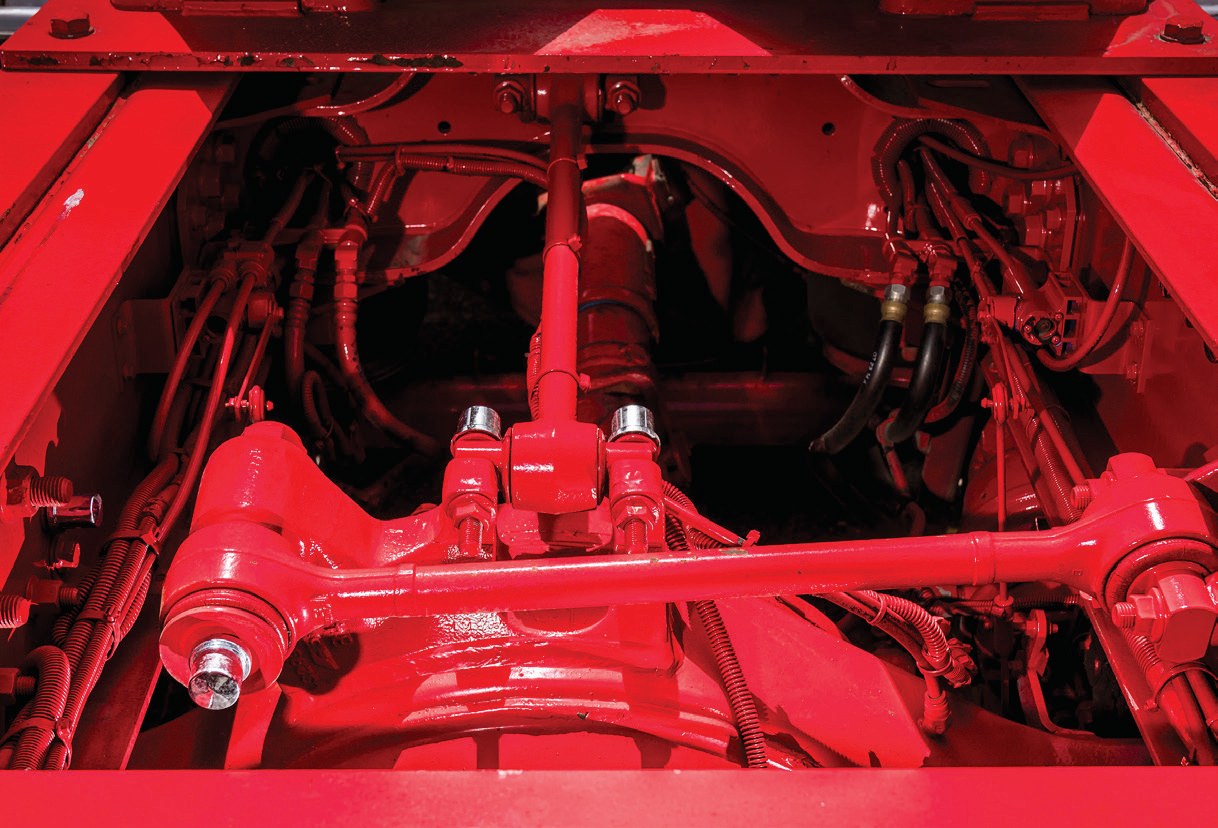
They painted the chassis and replaced the motor in it from another Mack that had been written off. The new motor had done only 200,000 kms.
AAA Trucks added in a new transmission, a new running gear and new steering box as well as tidying up the paintwork.
The next stage was to dress it up.
Brian says he spent close to $15k shopping at Truckers Toy Store to get the additional bling.
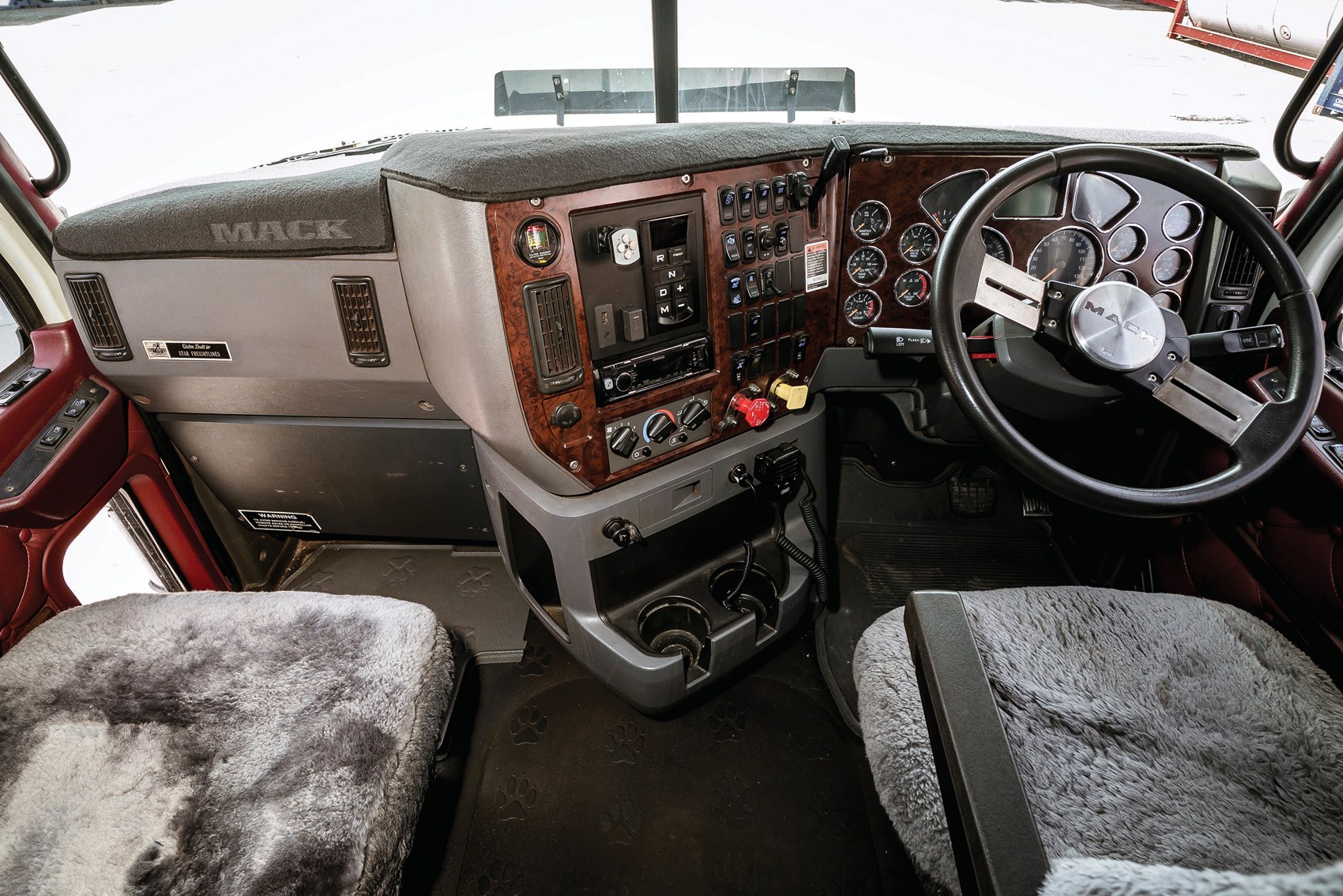
“We put on all new guards, the back taillight bar, wheel nut covers and the air cleaners,” he tells ACT.
He admits, “it got a bit out of control, but we just wanted something that looked special out there, something a little different, which it does, and a lot of people notice it”.
He explains the plan is to take the Mack to as many truck shows as he can and do some branding for the company so no doubt you’ll be seeing it around the traps in Victoria sometime soon and probably won’t forget it when you see it.
The Scania fleet is a result of years of trial and error coupled with one of the best deals that was offered on the market at the time.
In the past B&K Express Freight have run Western Stars that were bought from AAA Trucks that were close to five-years-old and had been rebuilt after being involved in crashes.
They were stripped down and fully rebuilt and repainted.
“We’ve had a couple of them, they did the job well, they are good looking trucks, but they were just a bit too long in the tooth, so we moved them on,” Brian tells ACT.
With the container work he says they have also had Iveco trucks as the fleet truck in the past.
He says one of the issues these days is finding drivers that can drive a manual truck, and hence the move to automated transmissions.
“The Scanias are a super truck, we’ve cut down our fuel bill as well as our maintenance, and brake wear as well. As soon as the drivers are too heavy on it, we get a report sent to us. With those Scanias we have a three-year plan where we don’t pay anything for maintenance for three years.”
He says these days the Scania brand is visible everywhere, and that was part of the attraction for creating a Scania fleet.
They have also had MANs in the past and say the only problem they had was with their re-sale.
“You struggle to get any money back from them (MANs) and they are a lot dearer than a Scania.”
“Three years-ago when we replaced eight trucks we shopped around in the market, we looked at MAN, Scania, Mercedes and at the time Scania had the better deal with the package. MAN just couldn’t come close.”
When it comes to trailing equipment the 560hp Scanias are coupled to A-doubles, providing room for two 40-foot containers. This is a Performance Based Standards (PBS) design that gets the most productivity out of the combination.
“We have all sorts of trailers, but the A-doubles are Freighter trailers,” he tells ACT.
“These A-double combinations are definitely high-productivity vehicles and we find them valuable in the fleet for our freight task.”
Rear Vision: where are they now?
Do you know where this truck is today, or have an update on its story? Tell ACT what happened next. We will verify current updates before adding them to the archive.